
Welcome to Domuschola International School

International Baccalaureate (IB Diploma) Pogramme in Philippines

LEARNING AT DIS

The IB Programme

Our Programme

International Baccalaureate
Programme
at Domuschola
International School

At DIS, the International Baccalaureate (IB) Programme shapes an engaging, forward-thinking education from early years to high school graduation. Each phase of the IB journey at Domuschola is designed to encourage academic excellence, curiosity, and personal growth. The IB’s guiding principles—rooted in its mission and the Learner Profile—encourage inquiry, intercultural understanding, and reflection.

Your Child’s IB Journey with Us

Stages of
the IB Programme

The IB Learner Profile is woven into every stage of the curriculum, shaping well-rounded students who are principled, caring, and open-minded. At Domuschola, the IB Programme isn’t just about academic achievement—it’s about developing compassionate, capable young leaders ready to thrive in an interconnected world.

01.

Primary Years Programme (PYP)
Age 3-12
Nursery-Grade 6

The PYP lays a foundation for lifelong learning. Young students explore ideas through guided inquiry and creative play, building essential skills and developing a love for learning.

02.

Middle Years Programme (MYP)
Age 11-16
Grade 6-10

The MYP encourages students to think across disciplines and apply their knowledge to real-world situations. It helps them make meaningful connections between subjects, fostering critical thinking and a global perspective.

02.

Diploma Programme (DP)
Age 16-18
Grade 11-12

The DP challenges students in Grades 11 and 12 with a rigorous curriculum that prepares them for university and beyond. The programme blends academic study with personal development, emphasising research, creativity, and service.

Learner Profile

The IB Learner Profile at Domuschola

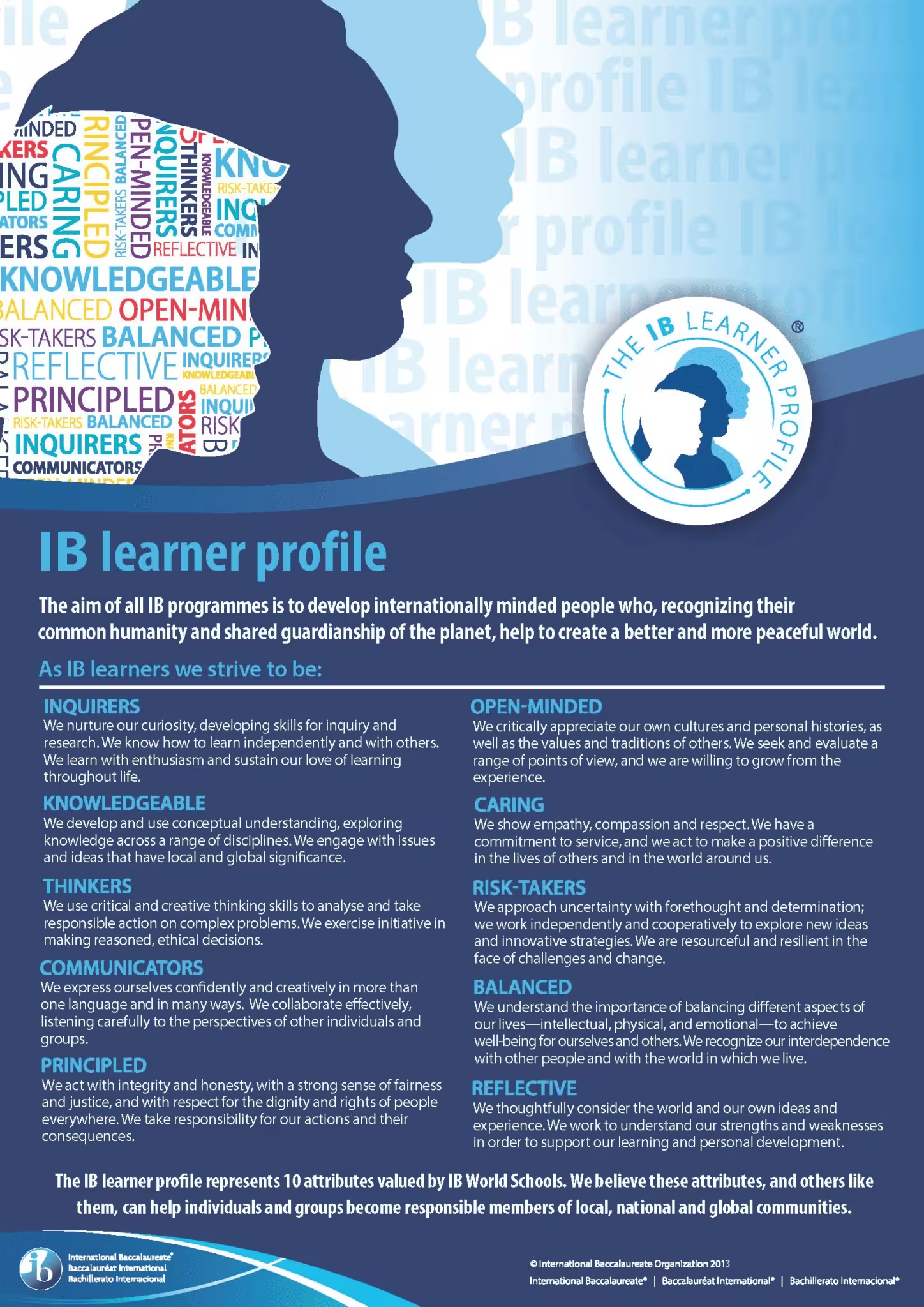
At Domuschola International School, we embrace the IB Learner Profile as a cornerstone of our educational approach. These 10 attributes—ranging from being knowledgeable and principled to being caring and open-minded—shape how we teach, learn, and interact every day.

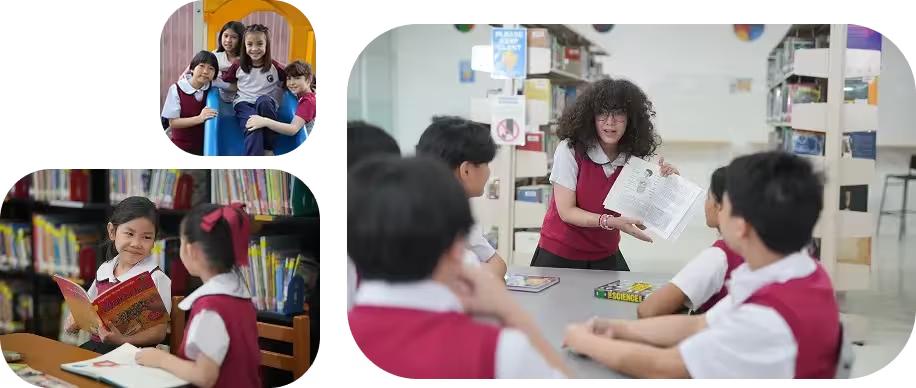
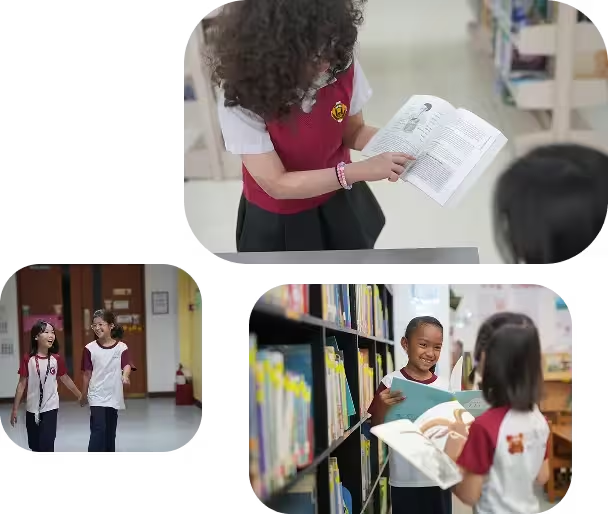
The Learner Profile is integrated throughout the curriculum. Teachers incorporate it in lessons, using stories and real-life examples to inspire students to embody these qualities in the classroom and beyond. Our library features a rich selection of books that highlight each attribute, reinforcing these values across different contexts. It’s part of our mission to guide students not just as learners but as thoughtful, balanced leaders of the future who contribute positively to their communities, both local and global.

Key Features

Key Features of the
IB Diploma Programme

Student-Centered Learning

The IB Learner Profile shapes the programme, placing each student’s development at the centre of teaching and learning.

Building on transdisciplinary skills from earlier years, students develop five key areas of ATL skills: social, communication, thinking, self-management, and research. These skills empower students to ‘learn how to learn’ across all disciplines.

Students select six subjects from six groups:

  • Two languages
  • Individuals and Societies
  • Sciences
  • Mathematics
  • Arts (or an additional subject from the other groups)

They are required to choose three subjects at Higher Level (HL) and three at Standard Level (SL), ensuring depth and breadth in their studies.

The DP core—Theory of Knowledge (TOK), Extended Essay (EE), and Creativity, Activity, Service (CAS)—connects academic learning with real-world exploration and personal growth.

Every aspect of the programme is designed within a context of international-mindedness, which values both global perspectives and local cultures and contexts.

Core Components

The Core Components

Creativity, Activity, Service

CAS is at the heart of the IB Diploma Programme, supporting students’ personal and interpersonal growth through experiential learning:

  • Creativity: Exploring and extending ideas to create original works or performances.
  • Activity: Physical pursuits that promote a healthy and active lifestyle.
  • Service: Collaborative projects that address authentic community needs.
    CAS is tailored to each student’s interests and skills, providing a unique and transformative experience.

TOK develops critical thinking by encouraging students to explore how knowledge is constructed and valued across disciplines. Through inquiry-driven learning, students question:

  • How do I know what I know?
  • How can I verify or challenge this knowledge?
    TOK is interwoven with all DP courses, sparking connections that deepen students’ understanding of themselves and the world.

At Domuschola, the IB Diploma Programme is more than an academic challenge—it’s a transformative experience. Our students emerge as confident, capable thinkers, ready to thrive in university and make meaningful contributions to their communities and the world.

FAQ

Why Choose the IB Diploma Programme at Domuschola?

At Domuschola, the IB Diploma Programme is more than an academic challenge—it’s a transformative experience. Our students emerge as confident, capable thinkers, ready to thrive in university and make meaningful contributions to their communities and the world.

What is the Diploma Programme?

The Diploma Programme (DP) is a curriculum framework designed by the International Baccalaureate (IB) for students in the last two years of high school.

IB students graduating with the IB diploma are able to study at universities all around the world, often with advanced credit. Students report that their involvement with the IB has given them the tools needed to succeed at college. In par-ticular, students comment on their sense of preparedness, self-confidence, research skills and their ability to manage their time. Even more important, they have developed a sense of the world around them and their responsibility to it.

Diploma Programme students study six subjects (three at standard level and three at higher level) over two years and complete three additional requirements: the theory of knowledge (TOK), the extended essay and at least 150 hours of CAS-creativity, activity and service tasks outside of the classroom. In addition to these requirements, students must earn a minimum of 24 points out of a possible 45 points on the final assessments which are externally marked and moderated by the IB, in order to receive an IB diploma.

Theory of knowledge (TOK)
TOK is an interdisciplinary course designed to help students question and understand how they know what they know.

Students study how individuals from various disciplines view the world in order to develop their own ways of thinking.

By stimulating analysis of knowledge across disciplines, TOK seeks to help students make sense of school and the world.

Creativity, activity, service (CAS)
CAS is an experiential leaming component of the DP. Students complete a wide vanety of extracuricular, community service and athletic options to fulfill this requirement.

Extended essay
The extended essay introduces students to the demands and rewards of independent work. Emphasis is placed on doing personal research and communicating ideas effectively in order to write a 4,000-word essay in an area of personal interest.

The DP is internationally recognized as representing one of the highest standards in university preparatory education.

More than 1,000 colleges and universities in North America have recognition policies on how they weigh it in admis-sions, advanced standing, college credit and scholarships.

A list of colleges and universities that grant credit, scholarships and/or advanced standing for DP diplomas and certificates is available at www.ibo.org.

The DP is a rigorous course of study for motivated students.

That said, prior academic success is less an indicator of ability to earn the diploma than are a student’s determination to do his or her best, willingness to be organized in order to complete the work while leading a full, balanced life, and a strong commitment to learning in and beyond the classroom.

Absolutely. Most successful Diploma Programme students lead very full lives. They are often members of athletic teams and involved in a wide range of activities. Time management and organization are key skills the IB develops in students.

The IB does not control how schools designate their Diploma Programme. In some instances, schools choose to designate the programme as selective enrolment via application or as a magnet programme. In other cases, the programme is open to any student.

Al DP teachers receive professional development in the IB’s approaches to teaching and approaches to learning from certified IB workshop leaders. This is a requirement for IB World Schools implementing the DP.

The IB is committed to making sure that students in IB programmes meet and exceed local or national standards.

With the implementation of any IB programme, schools are required to examine their curriculum carefully to ensure that there is alignment with local, state or national standards. More information on the IB and the Common Core is available at www.ibo.org.

Not all students choose to take the full course load leading to a diploma. Instead, some take a few DP courses in areas where they have a particular interest or strength, similar to honours and Advanced Placement classes. Certificates are awarded on a course-by-course basis to students who choose not to do the full programme. Students who satisfactorily complete a DP course earn a certificate and may be eligible for university credit.

The IB DP is a two-year comprehensive curriculum with a culminating set of externally graded final exams. IB, Advanced Placement (AP) and other college-preparatory curriculums like Cambridge are all university preparatory, academically rigorous programmes. There are important differences, however, in the content and exams. The DP is a cohesive and comprehensive programme, not a collection of individual courses as is the case with Advanced Placement. The most important distinguishing factor is the core of the Diploma Programme (CAS, TOK and extended essay).

A 2012 study by the Consortium for Chicago School Research found that Diploma Programme students who graduated from 12 Chicago public schools were more likely to attend college, attend a selective college and persist in college for 2 years than a matched comparison group. Additional studies on programme impact are available at www.ibo.org/research

  • Visit the IB website at www.ibo.org
  • Attend school meetings and events
  • Speak with your school’s DP coordinator
  • Speak with your child’s DP classroom teachers.

Join Domuschola’s IB community and embark on a journey that shapes confident, future-ready leaders.