
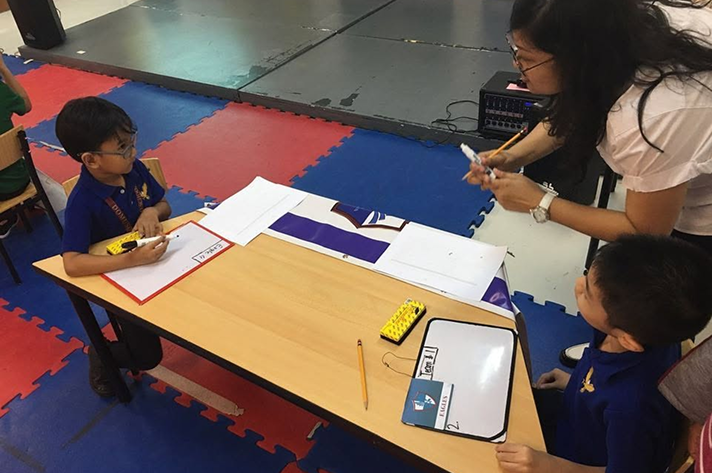
A child’s earliest years lay the foundation for lifelong learning. During this stage, children develop essential cognitive, social, emotional, and communication skills that influence how they learn, interact, and adapt throughout their education. Choosing the right early years school is therefore one of the most important decisions parents can make. A nurturing environment, engaging curriculum, and supportive educators can inspire curiosity, confidence, and a genuine love for learning from an early age.
In recent years, more families in the Philippines have been exploring international education, with a growing number enrolling their children in International Baccalaureate (IB) schools. Parents are increasingly recognising the value of an internationally recognised education that balances academic excellence with character development, global awareness, and inquiry-based learning. The IB PYP curriculum has become particularly popular because it equips young learners with the knowledge, attitudes, and skills needed to succeed both inside and outside the classroom.
In this blog, we’ll explore:
- What the IB Primary Years Programme (PYP) is and how it supports early childhood education
- Why the early years are crucial in a child’s learning journey
- The key factors to consider when choosing an IB PYP school
- The characteristics of a high-quality IB PYP learning environment
- The long-term benefits of choosing the right IB PYP school
- Common mistakes parents should avoid during the selection process
- Why Domuschola International School is an excellent choice for IB PYP education
What Is The IB Primary Years Programme?
Parents who are asking what is PYP are often looking for a curriculum that goes beyond traditional classroom learning. The Primary Years Programme is the first stage of the International Baccalaureate curriculum, designed for children aged 3 to 12. It focuses on developing the whole child through inquiry, collaboration, creativity, and meaningful real-world learning experiences.
Unlike traditional subject-centred approaches, the IB PYP curriculum connects different disciplines through transdisciplinary themes. Students are encouraged to ask questions, investigate concepts, solve problems, and reflect on their learning, making education more engaging and relevant.
This approach is important because young children are naturally curious. By nurturing that curiosity instead of simply delivering information, the PYP helps children become active participants in their own learning journey.
For example, a unit about communities may combine language, mathematics, science, social studies, and art. Rather than learning each subject separately, students investigate how communities function, interview local helpers, create maps, and present their findings, developing multiple skills simultaneously.
Why the Early Years Matter in a Child’s Learning Journey
The early years represent one of the most significant periods of brain development. During this stage, children rapidly develop communication, motor coordination, emotional regulation, and social interaction skills that form the basis for future academic success.
Because learning habits begin developing during these formative years, the quality of a child’s educational environment has a lasting impact. Schools that encourage exploration, creativity, and independence help children build confidence while developing a positive attitude towards learning.
Research consistently shows that children who experience high-quality early childhood education often demonstrate stronger literacy, numeracy, communication, and problem-solving skills as they progress through school.
For example, children who regularly participate in collaborative play learn negotiation and teamwork, while inquiry-based classroom activities encourage them to ask thoughtful questions and explore multiple solutions to a problem. These experiences contribute to the development of a strong life skills curriculum that extends beyond academics.
Key Factors to Consider When Choosing an IB PYP School
Choosing the right school involves more than comparing facilities or tuition fees. Parents should evaluate several factors to determine whether the school aligns with their child’s learning needs.
First, verify that the school is officially authorised to offer the International Baccalaureate curriculum. Authorised IB World Schools undergo a rigorous evaluation process to ensure they meet international standards.
Second, consider the school’s teaching philosophy. Effective IB schools embrace inquiry-based learning and use innovative teaching methods that encourage curiosity, collaboration, and independent thinking rather than rote memorisation.
Third, evaluate the qualifications and experience of the teaching staff. Experienced IB educators understand how to facilitate inquiry while providing personalised support for individual learners.
Finally, look at the school’s approach to holistic development. A strong IB PYP curriculum should balance academics with creativity, physical wellbeing, character education, and social-emotional development.For example, schools that provide inquiry centres, collaborative classrooms, outdoor learning spaces, and student-led projects often create richer learning experiences that support children’s overall development.
Signs of a High-Quality IB PYP Learning Environment
A quality IB learning environment extends beyond attractive classrooms. It is characterised by a culture that encourages curiosity, respect, reflection, and active participation.
Students should be encouraged to ask questions, investigate ideas, and take ownership of their learning. Teachers act as facilitators who guide exploration rather than simply providing answers.
Another important indicator is personalised learning. Every child develops differently, and many effective IB schools in the Philippines recognise these differences by adapting learning experiences to individual strengths, interests, and developmental needs.
Parents should also observe whether classrooms encourage collaboration and student voice. Children who feel comfortable expressing ideas and working together often become more confident communicators and independent learners.
Examples include inquiry corners filled with interactive learning materials, student portfolios showcasing individual growth, collaborative project displays, and classrooms where children actively discuss ideas with their peers.
Benefits of Choosing the Right IB PYP School for Early Childhood Education
Selecting the right IB PYP curriculum provides benefits that extend well beyond primary education, be it in the Philippines or globally. Students develop strong academic foundations while also building essential personal and interpersonal skills.
One major benefit is the development of critical thinking. Rather than memorising information, students learn to analyse, question, and solve problems independently.
Another advantage is stronger communication. Through discussions, presentations, collaborative projects, and reflective learning, children become confident in expressing their thoughts and ideas.
The programme also strengthens international-mindedness by encouraging respect for different cultures and perspectives. This prepares children to thrive in an increasingly interconnected world.
Perhaps most importantly, the PYP develops lifelong learners. Students leave the programme with curiosity, resilience, adaptability, and a passion for continuous learning—qualities that support future academic and personal success.
Common Mistakes to Avoid When Selecting an IB PYP School
Many parents understandably focus on visible features such as campus facilities or school rankings. While these are important, they should not be the only considerations.
One common mistake is overlooking the school’s teaching philosophy. A beautiful campus cannot replace meaningful learning experiences delivered through effective teaching practices.
Another mistake is focusing solely on academic performance without considering social-emotional wellbeing. Early childhood education should nurture confidence, independence, empathy, and communication alongside literacy and numeracy.
Parents should also avoid choosing a school without visiting the campus. Observing classroom interactions, speaking with teachers, and understanding the school’s culture often provide valuable insights that brochures cannot convey.
Finally, avoid selecting a school based solely on convenience. Although location is important, the quality of education and alignment with your child’s needs should remain the highest priorities.
Why DIS Has Been Certified As The Ideal Choice for IB PYP Education Since 2011
At Domuschola International School, the IB Primary Years Programme is delivered through an engaging, child-centred approach that recognises every learner’s unique potential. Inquiry-based learning, personalised support, and meaningful real-world experiences encourage children to become confident, independent, and compassionate learners.
Teachers utilise innovative teaching methods that inspire curiosity while supporting academic excellence. Classrooms encourage collaboration, creativity, and critical thinking, allowing students to actively participate in their own learning rather than simply receiving information.
Beyond academics, Domuschola places strong emphasis on developing character, wellbeing, and global citizenship. The school’s nurturing environment supports the growth of communication, leadership, resilience, and empathy—forming a comprehensive life skills curriculum that prepares students for future challenges.
As part of the Global Schools Group network, Domuschola also provides students with opportunities to experience international perspectives while remaining connected to their local community. This combination of global outlook and personalised education creates a strong foundation for lifelong learning.
Conclusion
Choosing the right early childhood school is an investment in your child’s future. While many schools provide quality education, the IB PYP curriculum offers a unique approach that combines academic excellence with inquiry, creativity, collaboration, and holistic development. Through the International Baccalaureate curriculum, children learn not only essential academic concepts but also the confidence, resilience, and critical thinking skills needed to succeed throughout their educational journey.
Understanding what is PYP and carefully evaluating a school’s philosophy, learning environment, educators, and commitment to holistic development allows parents to make informed decisions with confidence. At Domuschola International School, every child is encouraged to explore, question, create, and grow in a supportive environment that nurtures both academic achievement and personal development. By choosing the right IB PYP school, parents provide their children with a strong foundation for lifelong learning and future success.