
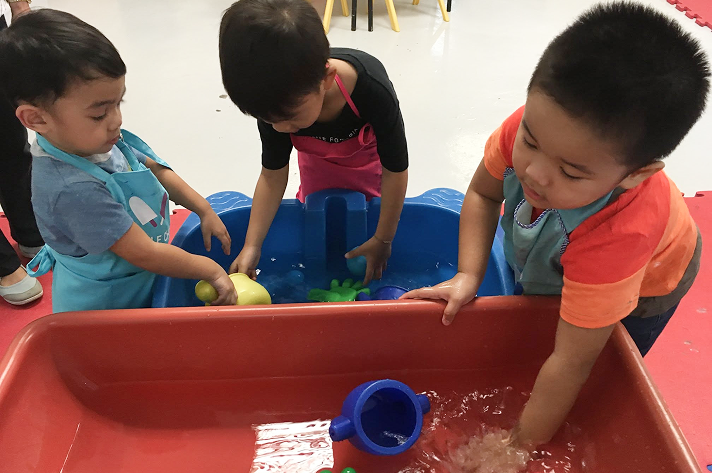
Play-based learning helps preschoolers build thinking, language, social, emotional and creative skills through activities they find meaningful. When children build a tower, act out a story or solve a puzzle together, they aren’t “just playing”. They’re exploring ideas, making decisions, testing solutions and learning how to work with others.
What Is Play-Based Learning?
Play-based learning is an approach in which children learn through exploration, interaction and experimentation. The activity may be chosen by the child, gently guided by a teacher or planned around a particular learning goal.
It isn’t the opposite of structured learning. Instead of only listening to an explanation or completing a set task, children handle materials, ask questions, make choices and discover what happens next.
The International Baccalaureate’s guidance for the PYP early years describes play as a main driver of inquiry. It also recognises that young children develop at different rates and learn through relationships with teachers, classmates, families and their wider community.
Why Is Play-Based Learning Important for Preschoolers?
Play makes learning enjoyable, but enjoyment isn’t its only purpose. It encourages curiosity and keeps children actively involved. A child who wants to discover whether a block bridge will hold a toy car is already observing, predicting and solving a problem.
Play also lets children work at a pace that suits them. A pretend shop, for example, can introduce counting, conversation, turn-taking and real-world roles in one activity.
The National Association for the Education of Young Children links play with self-regulation, language, cognitive development and social competence. The quality of the experience still matters. Children need safe materials, enough time and adults who know when to guide and when to step back.
Essential Skills Preschoolers Develop Through Play-Based Learning
Different kinds of play support different areas of development, and one activity can build several skills at once.
1. Cognitive and Problem-Solving Skills
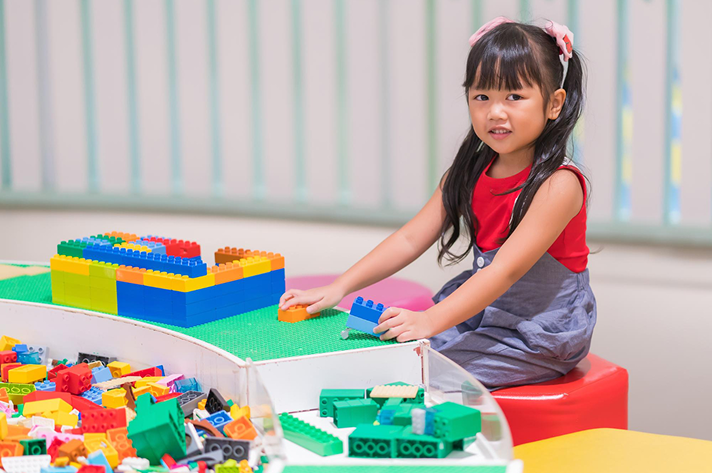
Puzzles, blocks, sorting and matching games invite children to notice patterns and test solutions. Rebuilding a fallen tower, for example, can help children develop reasoning and persistence.
2. Language and Communication Skills
Storytelling and pretend play give children a reason to speak and listen. They learn new words through conversation and begin to express ideas and feelings more clearly.
3. Social Skills and Teamwork
Group games help children practise taking turns, sharing and working towards a common goal. With calm support, they can learn to listen, negotiate and respect simple rules.
4. Emotional Development
Pretend play lets children explore feelings and familiar situations. Completing a challenge builds confidence, while manageable setbacks offer practice in handling frustration.
5. Creativity and Imagination
Art, music and imaginative play give children room to create. A cardboard box can become a bus, shop or home, with no single correct result.
6. Critical Thinking and Decision-Making
Open-ended activities ask children to choose, predict and notice cause and effect. A well-timed question such as “How can the bridge be stronger?” encourages deeper thinking.
Examples of Play-Based Learning Activities for Preschoolers
Useful activities don’t need to be elaborate. Teachers can adapt these ideas to the children’s ages, interests, abilities and current learning goals:
- Building blocks and construction play
- Role-play and pretend-play areas
- Storytelling and puppet shows
- Art and craft activities
- Music and movement games
- Puzzles and matching games
- Supervised water and sand play
- Nature-based exploration
- Sorting and counting games
Materials should be safe and age-appropriate. Children who don’t enjoy a particular texture or group activity should have another way to participate.
How Can Teachers Encourage Play-Based Learning in the Classroom?
Teachers can create inviting activity areas with accessible materials and balance guided experiences with independent play. Children also need enough time to explore without being rushed.
Following children’s interests matters too. If they become fascinated by leaves, the teacher might add sorting, drawing or counting. The focus stays on learning, not identical results.
What Is the Teacher’s Role in Play-Based Learning?
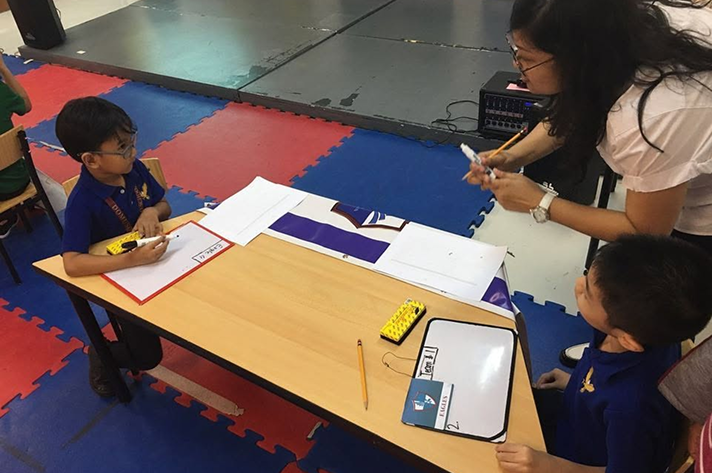
The teacher is an active facilitator. They observe individual needs, use prompts to extend thinking and help children join games or resolve disagreements.
Good facilitation is flexible. Sometimes a child needs guidance. At other times, the best choice is to wait and let the child test an idea independently. This balance helps create an inclusive classroom where children feel safe to ask questions, contribute and learn in their own way.
Parents exploring primary-level education in the Philippines or comparing the best schools in Metro Manila can ask how teachers balance child-led play with guided learning, adapt activities for different needs and share evidence of children’s progress.
Conclusion
Play-based learning turns ordinary activities into opportunities for meaningful development. Through blocks, stories, art, movement and shared games, preschoolers can practise thinking, communicating, cooperating and managing emotions.
The most valuable play isn’t necessarily the most complicated. It gives children room to make choices, explore an idea and stay curious, with a thoughtful teacher nearby to guide the next step.